

Medha Singh’s poetry collection Afterbody traffics across boundaries between our internal and external worlds, between the being and the body, between India and Scotland, all with a keen awareness of the mosaic pieces of the past and present that constantly accumulate to form who we are.
These poems explore and capture real places and imagined spaces: Edinburgh and Delhi, Dante’s hell, purgatory and heaven. The narrator that passes through these places pays particular attention to the details that encapsulate reality and lend it emotional weight.
In “Rewilding” Singh writes:
all I want in the anxiety and aimlessness
of the world and ecstasy is the courage of gardens
that endure the quiver of time.

These poems are the quietly courageous gardens Singh longs for, a clear-eyed space of articulation held together by the formal structures of language. Here is Singh’s incisive vision and reveling in detail:
Feather. Swivels slow, to the ground
off the sunny terrace
all the way down,
hurdles on its menace of a life
on this easy, quiet town
no floating, neither zigzag nor
wide curl
drops, drops straight, crowns
downward, whorls a hole in the thick air,
opening a center of gravity
that wasn’t there. Entering
life’s machinery, determined
to enter its fate at your feet
Here a feather is granted not just life, but menace, determination. No slave of gravity, it is a conscious being with purpose and a fate. It is beautiful and terrifying.
The poems of Afterbody take many forms, from narrative poems and prose to oracular lyrical utterances:
A line is the edge of a shadow,
A body lingers as an expression of life. The shadow is not the object.
The body needn’t live. The body is a shadow of the life in it.
These three lines move swiftly from a self-reference (“a line” is also a line of poetry) to a metaphysical pronouncement that gathers gravity for its concision.
There is also a series of poems indebted to Dante’s Divine Comedy here, including a triptych that reimagines Dante speaking directly to some of the most compelling characters in the Inferno, including Chaco, Francesca, and Cerberus, the “three-mouthed fiend… a cracked reflection / of the holy trinity.”
Here Singh imaginatively interrogates literary history, much as she does her own past in other poems. There is compassion here as Dante speaks to his characters and to himself through Hell, Purgatory, and Paradise.
Besides Dante, the poet’s father emerges as a central figure in this collection: “Father, first / man, now a scent I can’t bear.” The father’s presence and “Afterbody” permeates many of these poems, where Singh doesn’t attempt to escape her family history so much as mine her past for rich poetic material, turning it up for the reader to see, revealing herself and the reader’s humanity at once.
Afterbody is a powerful and powerfully sustained collection that interrogates the present by examining the past.
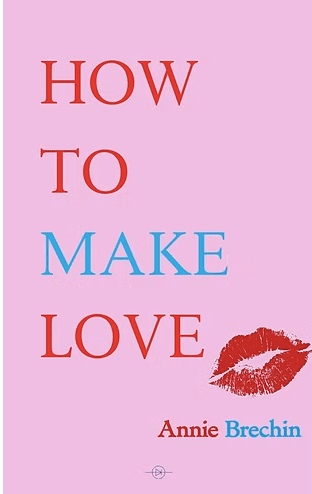
Brechin is an articulate poet with the capacity to make language as physical as the appetites it describes.
The book is organized geographically into five sections that trace a life lived across cities and continents: London, Prague, Paris, Dubai, Edinburgh. The structure is more than biographical scaffolding; each place carries its own kind of love and loss. London is rawness and early hunger; Paris is the long ache of a relationship that couldn’t hold; Dubai a neon dreamworld of excess and isolation; Edinburgh a hard-won domestic tenderness.
What strikes first is Brechin’s visceral verbal acuity. Brechin writes the body without euphemism and without apology, and her great subject is a desire to be played with by life, even when it hurts. The poems are full of carpark sex, tarmac burns, bitten lips and bloodied sheets, but they are never merely provocative. Beneath the swagger of what one might call the sex-and-shit poems lies a real and disarming vulnerability, an openness to experience that borders on the reckless.
In “#fuckyourdatingapps” Brechin catalogues her wants with bravado, but the poem turns on a final, exposed admission:
A man who isn’t afraid to use two dildos at once
that’s what I want, who checks at every step
are you ok? while taking me apart
A man who asks me what I want
and if I answer, to drown in pleasure
shipwrecks me every time.
Bravado and tenderness held in balance: that is the book’s signature.
“Tainted Love” is ostensibly a poem about the intimacy of shared bodily life, mingled smells and melded excrement, and it could read as deliberate transgression. But its real burden is devotion: a love so total it gilds the unglamorous, finding “no worst of you only best.” Brechin locates the romantic precisely where convention says it cannot be.
Throughout the collection, Brechin’s language is precise and expressive, alert to the exact texture of words and images. A hand drops “like a hawk falling / as it sights prey.” A lover’s body is found “Naked, underneath me. / Glittering.” In the Dubai poem “National Flower,” a remembered moment of near-violence—a partner’s hand coming out “open? or with closed fist”—is transfigured into a black iris blooming in the ear, “those indigo petals / unfolding, deafening.” The image holds beauty and menace together without resolving them.
Beneath all of these poems runs a real and sustained longing, for permanence, for a love that stays. This surfaces plainly in “Incompatible”:
I want a house on a beach, a dog,
a toddler running across the sand dunes.
You want me to be happy as long
as it is far away from you.
This collection has a pleasing diversity of forms, from the catalogue-poem and the prose-inflected narrative to tight lyric and the villanelle-like recursions of “You Don’t Rise” and “As Above, So Below.” Brechin can be very funny: “The Girl;” “Real World Valentine;” the Dali-drunk surrealism of “Fantasie: 5pm” don’t separate the humor from the feeling; in fact, it’s how she survives the feeling.
The Paris sequence “Marmotte & Tigrou” is the book’s emotional center: a long, breathless inventory of a relationship’s shared moments that collapses into unbearable plainness:
We are making love
on the Champs Elysees […]
We are sending whatsapp messages
that are just strings of kisses […]
I cannot make you love me.
All the poetry in the world
cannot make you love me.
The phantom children of that lost relationship haunt the close of the poem and show the depth of Brechin’s desires.
How to Make Love is Brechin’s second full-length collection, following The Mouth of Eulalie (Blue Diode, 2022). This book earns its provocations because it never stops being tender. There is true vulnerability beneath the bravado, and longing in the lust.
–Stephan Delbos